Forensic Science and the Problem of Uncertainty
Editorial: The Shifting Narrative of Uncertainty: A Case for the Coherent and Consistent Consideration of Uncertainty in Forensic Science
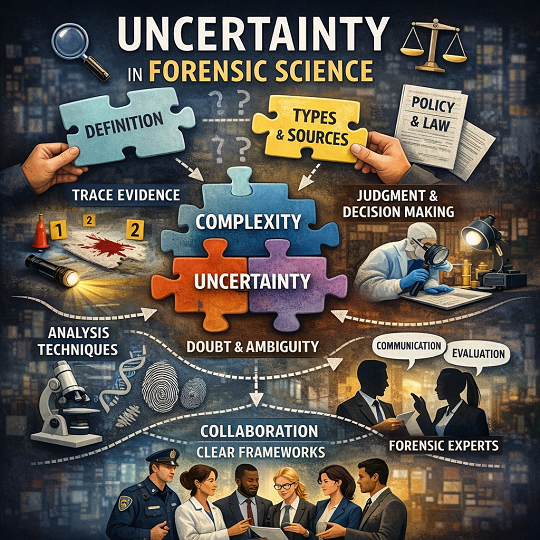
A 2023 review of academic literature, policy, and case law highlights persistent difficulty in forming a coherent understanding of uncertainty in forensic science, particularly in defining it and clarifying its types and characteristics, while also laying groundwork for a more consistent, cross-institutional approach.
A comprehensive definition that covers the unique aspects required for assessing uncertainty in forensic science is offered by Georgiou, Morgan & French (2023, p 784).
"Anything that falls short of determinism (ranging from the available data and evidence base, to the skill and experience of the expert) and which may have an impact on how much, how confidently and what part of the picture is known by the forensic science expert in relation to any stage of the crime reconstruction process."
It notes a clear shift in thinking: from attempts to avoid uncertainty to a growing recognition of its complexity and its unavoidable presence throughout the forensic process. Despite this progress, substantial work remains to achieve the clarity needed to conceptualise, evaluate, and report uncertainty within more comprehensive and effective frameworks.
Source: Georgiou, N., Morgan, R. M., & French, J. C. (2023). The shifting narrative of uncertainty: a case for the coherent and consistent consideration of uncertainty in forensic science. Australian Journal of Forensic Sciences, 55(6), 781–797. https://doi.org/10.1080/00450618.2022.2104370
Image: OpenAI. (2026). Rethinking uncertainty in forensic science [AI-generated image]. ChatGPT.