The Fraud Convergence Framework: Where Fraud Theories Meet Practical Prevention
Editorial: (Fraud Examination)
"Fraud Is Not Just a Control Failure: Integrity Under Pressure."
This follow-up editorial builds on the earlier editorial, "Fraud Is Not Just a Control Failure: Integrity Under Pressure", which argued that fraud should not be understood merely as a breakdown in controls, procedures or oversight, but as a pressured ethical decision shaped by organisational conditions, personal integrity, opportunity, capability and culture.
With this blog, I take the next step: reframing the overlaps and clashes among major fraud theories into a practical prevention framework.
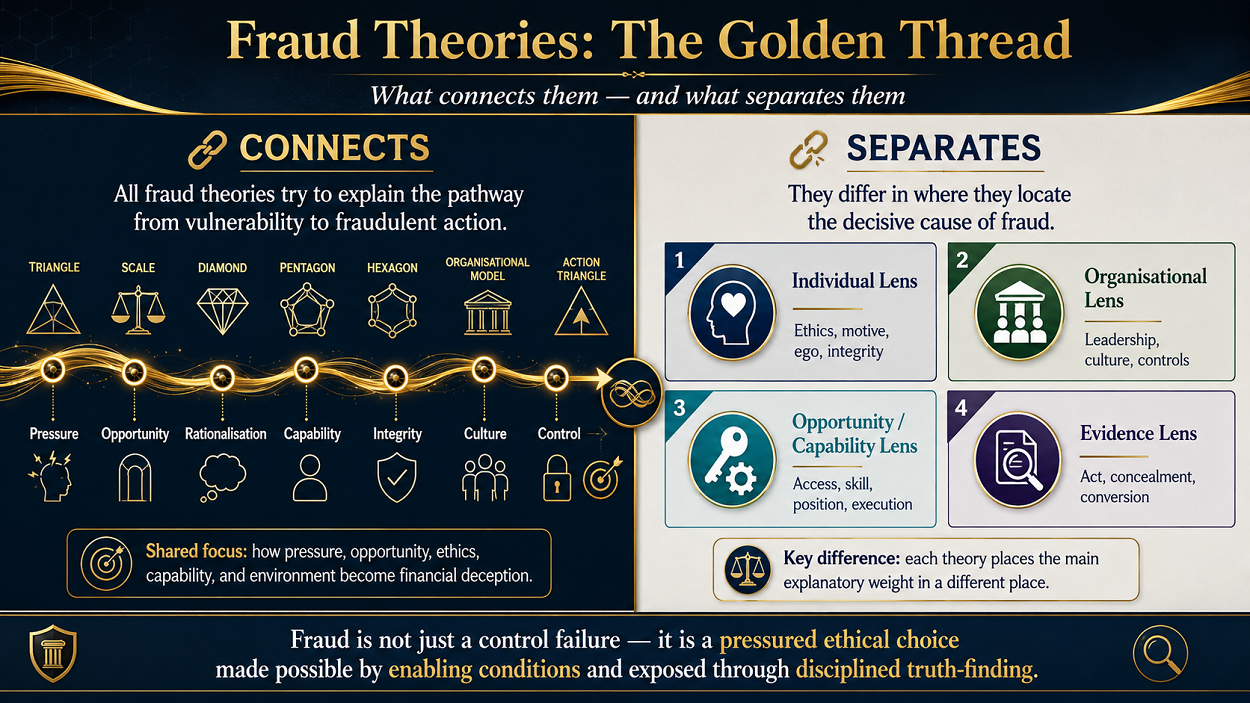
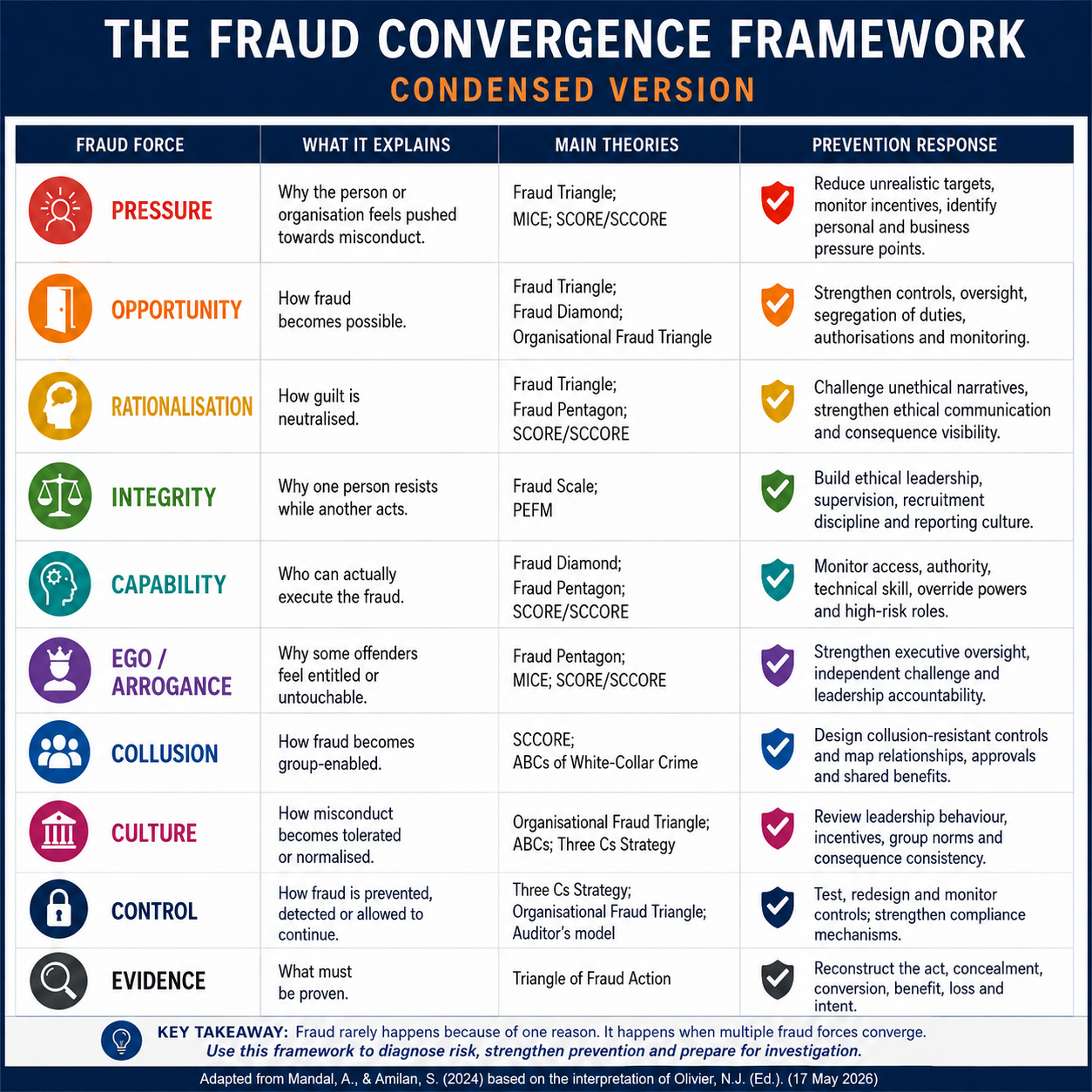
The Fraud Convergence Framework treats fraud theories as complementary diagnostic lenses rather than competing explanations. Their overlap shows that fraud is rarely caused by one factor: pressure creates strain, opportunity opens the door, rationalisation lowers guilt, capability enables execution, weak integrity permits ethical compromise, culture normalises behaviour, and poor controls allow misconduct to continue.
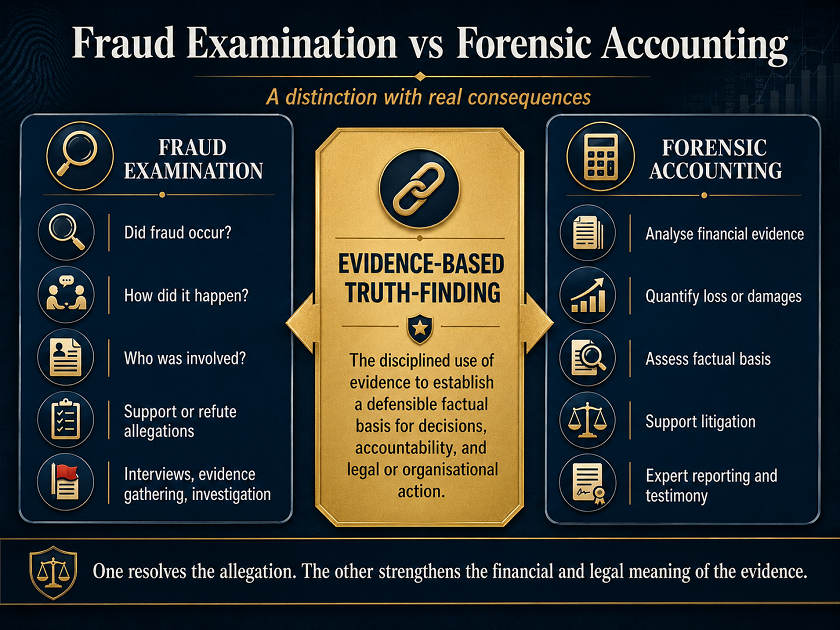
Their clashes are equally valuable because they reveal different intervention points. Condition-based theories focus on pressure and opportunity. Character-based theories demand integrity and ethical leadership. Capability-based theories require scrutiny of access, authority and technical skill. Social and organisational theories expose collusion, culture and leadership failure. Evidence-based theories bring the analysis back to what must be proven: the act, concealment and conversion.
The practical value of the framework is that it turns theory into prevention logic by asking not which model is correct, but which fraud forces are active and what must be done to interrupt them. Rather than treating the fraud triangle, fraud scale, fraud diamond, fraud pentagon, MICE, SCORE/SCCORE, organisational fraud models, ABCs of White-Collar Crime, the triangle of fraud action and the PEFM model as competing explanations, the Fraud Convergence Framework positions them as complementary diagnostic lenses.
Their overlap shows that fraud is rarely caused by one factor.
Their clashes reveal where prevention must intervene.
Source:
Olivier, N.J. (Ed.). (17 May 2026). Fraud is not just a control failure: Integrity under pressure. Forensic Academy Africa. https://www.forensicacademy.africa/fraud-is-not-just-a-control-failure-integrity-under-pressure
Mandal, A., & Amilan, S. (2024). Fathoming fraud: unveiling theories, investigating pathways and combating fraud. Journal of Financial Crime, 31(5), 1106-1125. https://doi.org/10.1108/JFC-06-2023-0153
Images:
OpenAI. (2026). Fraud Theories: The Golden Thread [AI-generated User-Prompted image]. ChatGPT.
OpenAI. (2026). The Fraud Convergence Framework: Prevention Response. Condensed Version [User-Prompted Infographic]. ChatGPT.
Expanded Version: Read an expanded version of the Blog on
LinkedIn.