
How To Become A Forensic Technician In South Africa
Nick Olivier • 4 September 2020
In this article we will explain the difference between a forensic technician and scientist.
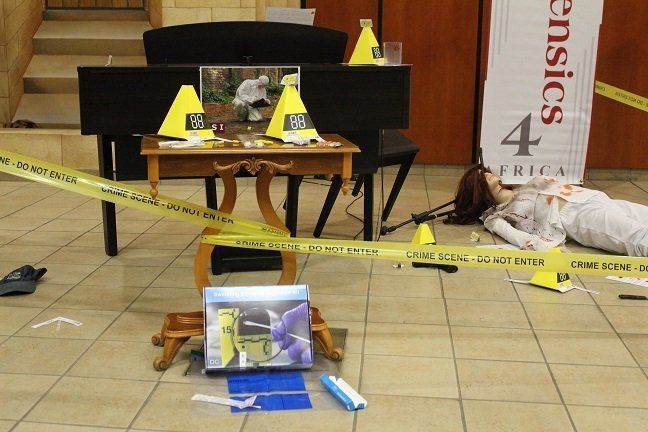
For every person the road to a career in forensics is unique. Some law enforcement officers’ love for forensics is born out of years on crime scenes. Others are born with a desire to have
a career in this field and some simply stumble upon a forensics career because of their love
for analysing data.
For forensic technicians, it’s all about evidence collection. From reconstructing a crime
scene to analysing phone records. For forensic scientists, this career stems from science.
What is a forensic technician?
Forensic technicians or criminalists are found both in the private sector and in law
enforcement. This is a broad term that refers to a few different fields within forensics. These can be
grouped under the following main categories:
- Forensic science: these individuals aspire to work in the Police Service's Criminal Record Centres or Forensic Science Services Division. This career path focuses specifically on the reconstruction of a crime scene, lab technicians who aspire to work with forensic biology or working to verify facts or documentation in a police investigation.
- Forensic biology: these technicians aim to work in either the private or public sector’s laboratories that take on forensic work. They can work either primarily with DNA, Chemistry or they can focus on forensic document examination.
How to become a forensic technician in South
Africa?
Through Law Enforcement
You can move into a career in forensics by joining the South African Police Service. Your
years of experience with SAPS, combined with a forensic qualification can open the doors
to become a forensic technician.
To become a police officer in South Africa:
1. You can apply to SAPS either by means of becoming a police official through the
South African Police Service Act or as a civilian employee. The primary difference
between the civilian and the police official is that the latter works in the field rather
than in administration.
2. In order to apply for either one of these positions you must pass a psychological
assessment test and have at least matric (NSC). You will also need to pass a physical
fitness test.
3. You can study to become a forensic technician prior or after you are employed by
SAPS.
Understand that terms and conditions regarding recruitment and careers applies
Through a qualification:
You can study to become a criminalist and then directly apply at the South African Police
Service's Criminal Record Centres or Forensic Science Services Division.
What to study towards forensics:
1. You will need to complete or have completed your matric with good grades in
mathematics and science.
2. You can then study towards a qualification starting on NQF5, this is equivalent to a
first year bachelors degree.
For Forensic Science, you should have had Mathematics, Communication
and Physical Science in matric.
3. Once you have completed the above, apply for the NQF 6 in Forensic
Biology, you will be required to complete the Forensic Biology Elective of the
NQF 5.
Forensic technician salary in South Africa.
- Once you have completed the above mentioned steps for forensic technician in the field of forensic science you can expect an average yearly income of R127,793* depending on the years of experience that you have acquired and relevant Terms and Conditions of the potential employer.
- As a crime scene investigator with the above mentioned completed you can expect an average yearly income of R242,667*.
- As a DNA expert, with the above mentioned completed your average yearly income can be around R269,370*.
The difference between a forensic technician and forensic
scientist in South Africa.
The primary difference between a forensic technician and scientist is the handling of
evidence.
Where the technician collects and documents evidence, or analysis documentation. The
forensic
scientist applies scientific methods (experiments) to build further on a case. This
combination of science and forensics creates the forensic expert.
These experts include medical examiners, pathologists and microbiologists, to name a few.
Unlike the technician, the forensic scientist does not often go to a crime scene itself, but
rather helps analyze collected evidence to individualize such evidence with the aim to
connect it to a person.
You can read more about the study path to become a forensic scientist in our previous
article here.
Forensic scientist salary in South Africa
- Forensic investigator salary in South Africa ranges around R307,075* per year.
- Pathologist and medical examiners can earn over a million rand per year*.
- Forensic analysts: can earn around the R282,299* mark yearly depending on their experience level.
We are seeing more and more forensic disciplines emerging, which means that job
opportunities in this field are expanding. Thanks to the technologically advanced times we
live in today, we are seeing better data and analysis filtering into forensic fields.
It’s an exciting time to explore a career in forensics! Explore our qualifications to help you
towards a career in this field.
Resources:
- South Africa Police Recruitment - www.how2become.com
- Forensic salaries South Africa - www.salaryexpert.com
- Career Opportunities in Forensic Science- By Susan Echaore-McDavid, Richard A. McDavid: ISBN-13: 978-0-8160-6156-3
* Salaries referenced to in this article are indicative only and subject to change

Editorial: (Anti Money Laundering) "Anti-Money Laundering and Customer Due Diligence: Empirical Evidence from South Africa." & "Grey-listing: South Africa’s Progress Plan Against its Action Plan." & "The Legal Implications of South Africa’s Grey-Listing for Money Laundering: Analysis and Recommendations ."

Editorial: (Corporate Governance) "Introduction to Corporate Governance." & "The Concept of Corporate Governance."

Editorial: (Compliance) "A framework to assess compliance training effectiveness: The case of banks in South Africa."

Editorial: (Fraud Examination) "Gift or bribe? The characteristics and the role of gift policies in the prevention of corruption."
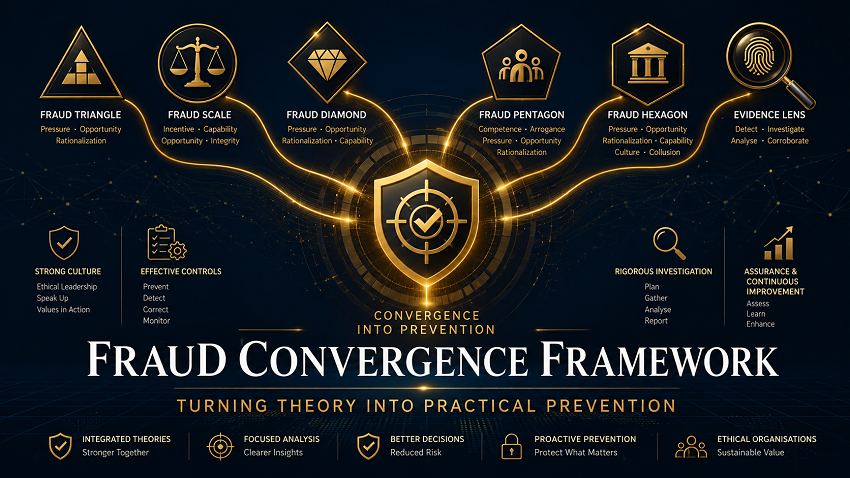
Editorial: (Fraud Examination) "Fraud Is Not Just a Control Failure: Integrity Under Pressure."
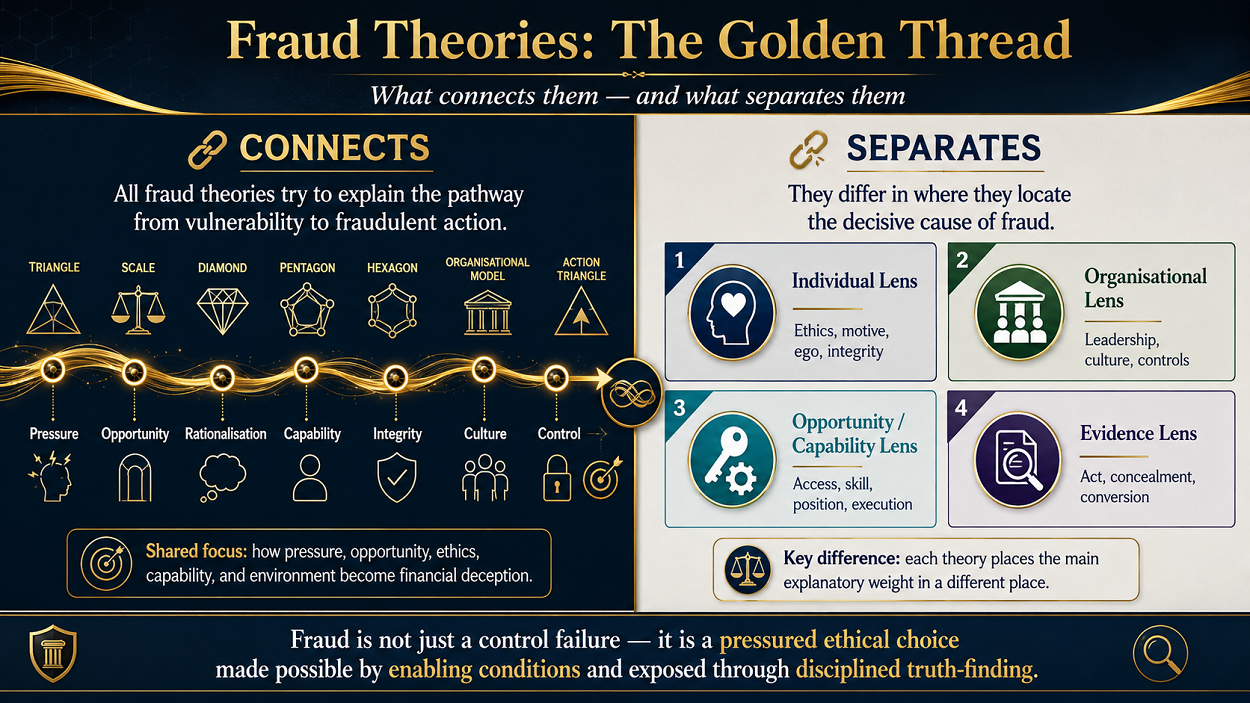
Editorial: (Fraud Examination) "Fathoming Fraud: Unveiling Theories, Investigating Pathways and Combating Fraud."
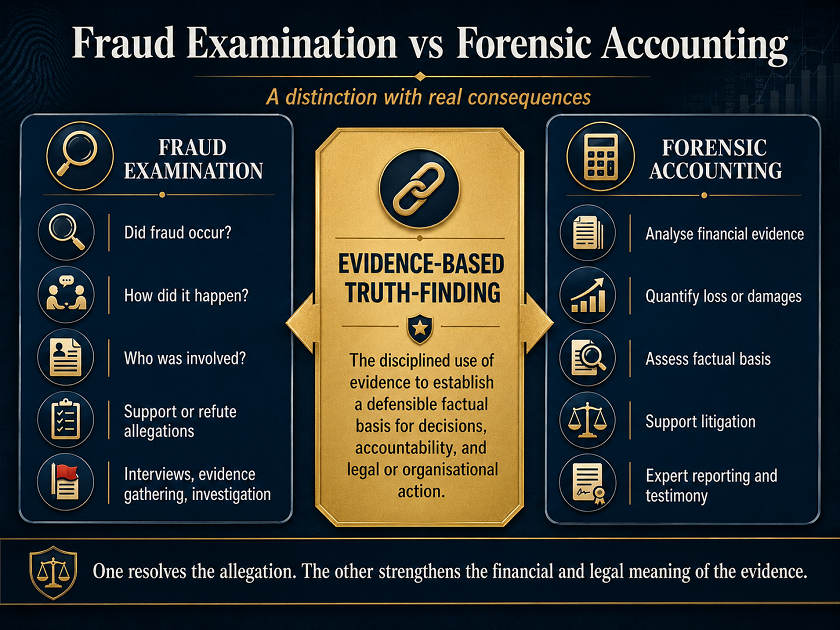
Editorial: (Fraud Examination) "Forensic Accounting vs Fraud Examination: Roles, Importance and Differences."

Editorial: (Compliance) "A Comparison of Key Risk Management Frameworks: COSO-ERM, NIST RMF, ISO 31.000, COBIT."
Editorial: (Digital Forensics) "Digital Forensics Has a Body of Knowledge Problem. This Taxonomy Is My Attempt to Fix It."

Editorial: (Forensic Science) Comparing "Thompson et al. 2025" with "Morrison et al. 2025": The Question About the Best Way to Present Likelihood Ratios.